Retaining Wall Repair in Manhattan for Tall, Old and Regulated Walls
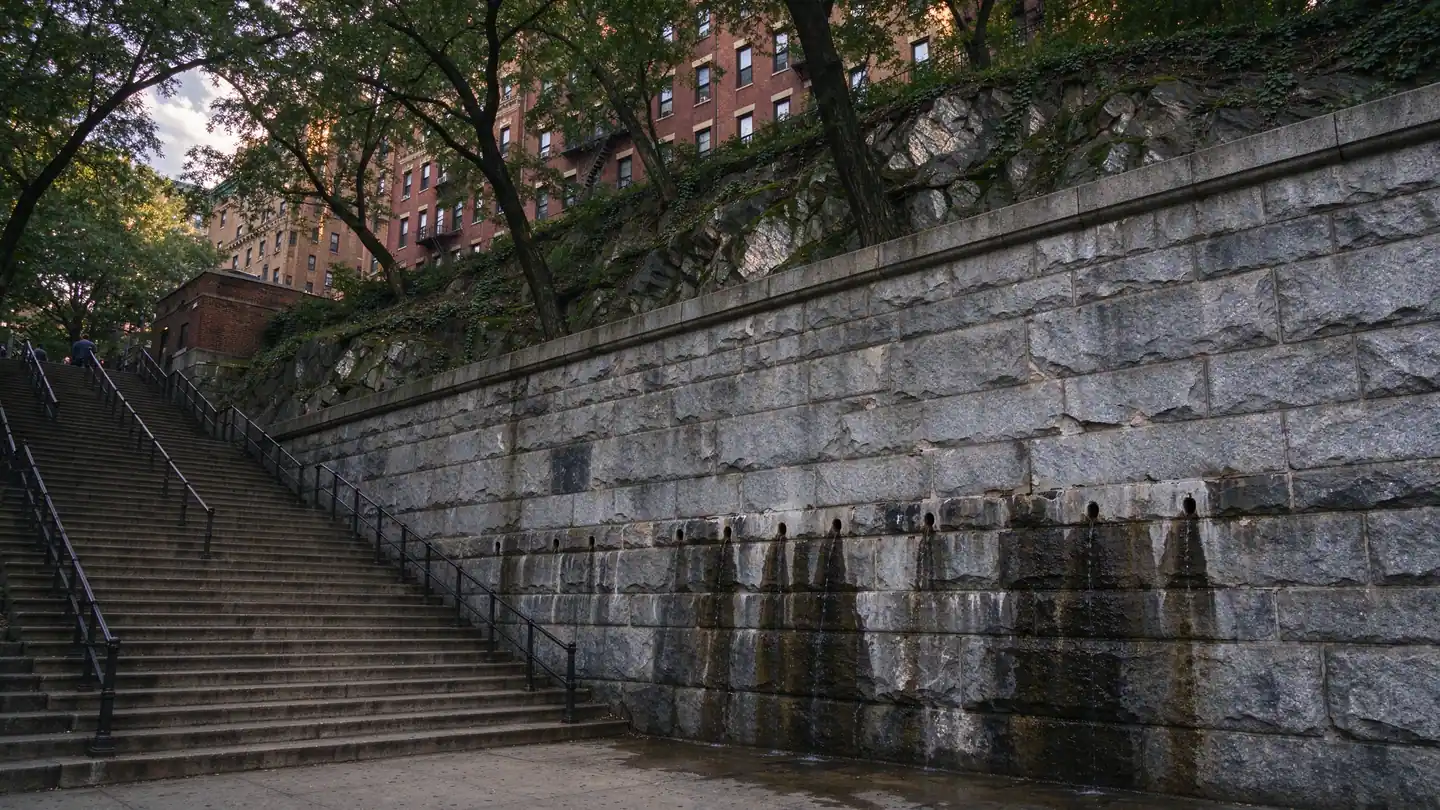
Local Law 37 was written after a Manhattan wall fell onto a parkway. Most of the borough's regulated walls still sit uptown, on the schist of Washington Heights and Inwood.
NYC Retaining Walls is a licensed and insured retaining wall contractor that handles retaining wall repair in Manhattan for co-op boards, property managers, institutions and building owners, with most of the work in Washington Heights, Hudson Heights and Inwood and along the Riverside Drive and Morningside slopes. Manhattan is where Local Law 37 began, and its regulated walls are still concentrated uptown: the Washington Heights (North) neighborhood ranks #3 of 262 citywide for combined retaining wall activity, and 0% of permitted wall jobs in its ZIP code, 10033, were on one- to three-family homes (NYC Open Data, DOB filings and violations, 2015–2026).
- Local Law 37 window
- 2025 (closed); next window 2030
- Terrain
- Manhattan schist escarpment; Inwood marble lowlands
- Most common jobs
- Co-op and institutional wall repair, SREM and Unsafe fixes
- Site visit
- Within 3 business days
Common retaining wall problems in Manhattan.
-
The 2025 report came back SREM
SREM repairs or monitoring are due within a year. A condition still uncorrected at the 2030 inspection must be reported Unsafe, and the rule adds a $2,000 penalty (1 RCNY §103-09).
-
An Unsafe rating starts a 90-day clock
Unsafe means notifying DOB through 311, protecting the public, getting a permit and correcting the condition within 90 days, then filing an amended report.
-
One wall behind several buildings
Uptown walls often run behind a row of buildings with different owners. Each owner is responsible for its share, and each pays its own $355 DOB filing fee.
-
Old stone on the escarpment
Coursed rubble and ashlar walls built against the schist lose mortar, bulge and shed stone where water gets behind them and freezes.
Retaining wall services in Manhattan.
-
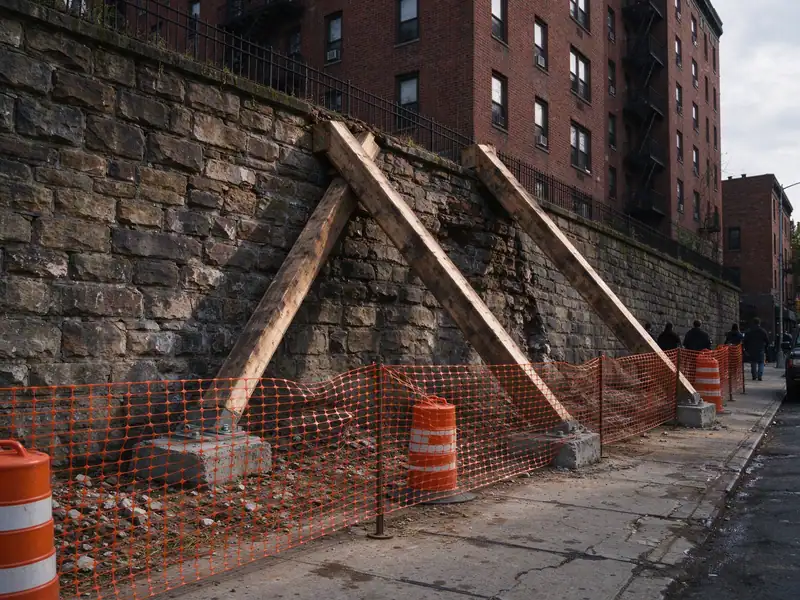
Retaining Wall Violation Repair
SREM and Unsafe ratings, DOB violations and complaints — repairs scheduled against your deadline. -
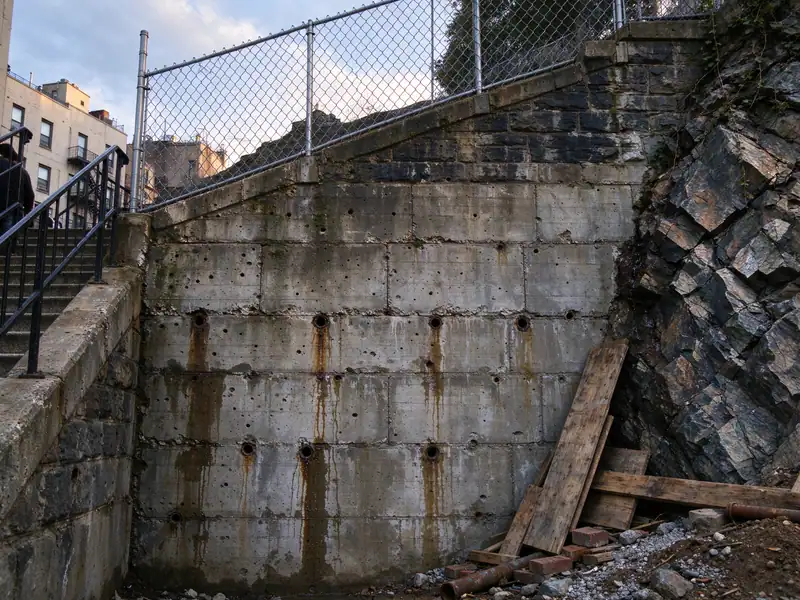
Retaining Wall Inspection
Local Law 37 compliance: we coordinate an independent QRWI, prepare the wall, and handle required repairs. -
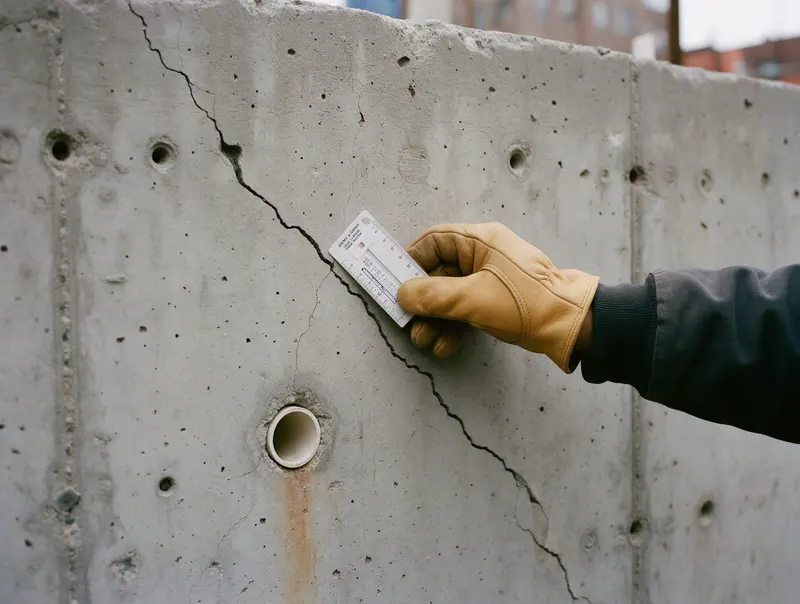
Retaining Wall Repair
Cracks, failed drainage, loose stone and block, cap and face repairs — fixed at the cause, not just patched. -
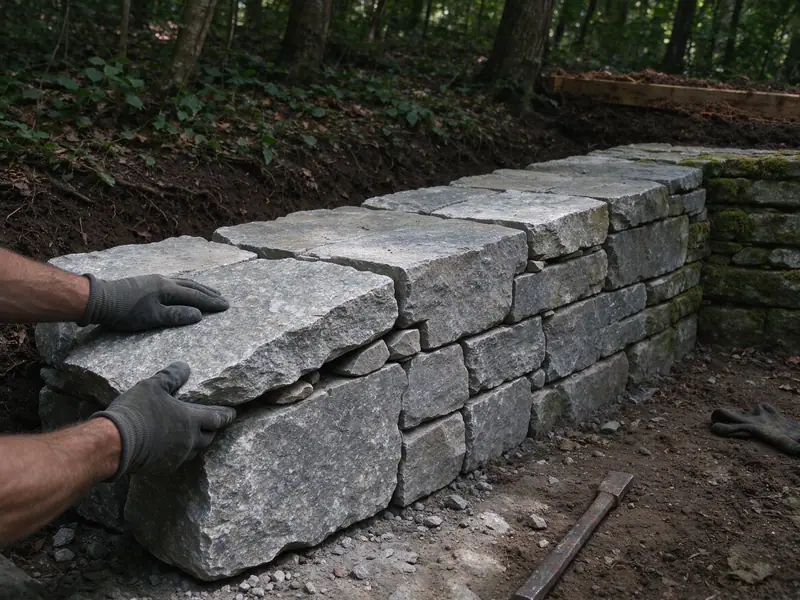
Stone Retaining Walls
Natural stone and fieldstone walls built and restored — repointing, resetting and matching old stone. -
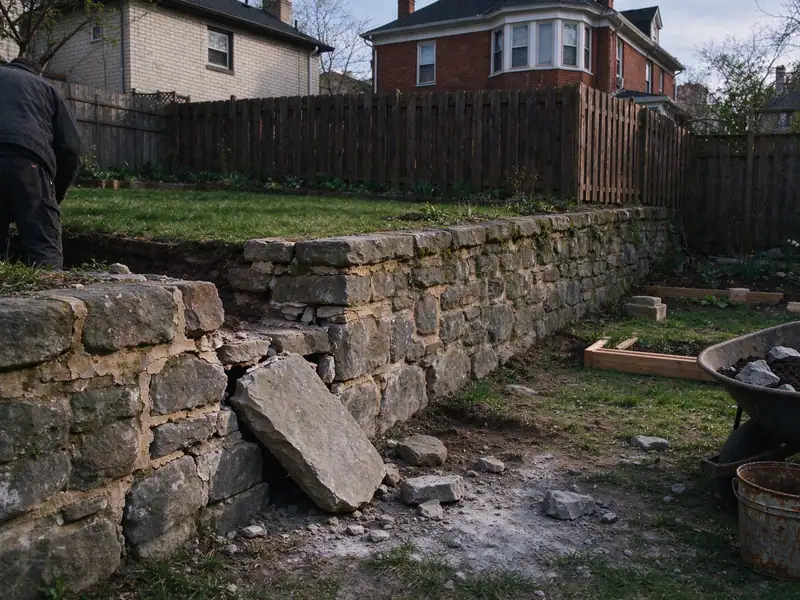
Shared Retaining Wall Repair
Lot-line walls between neighbors — one scope, one price, split the way NYC law and your agreement say. -
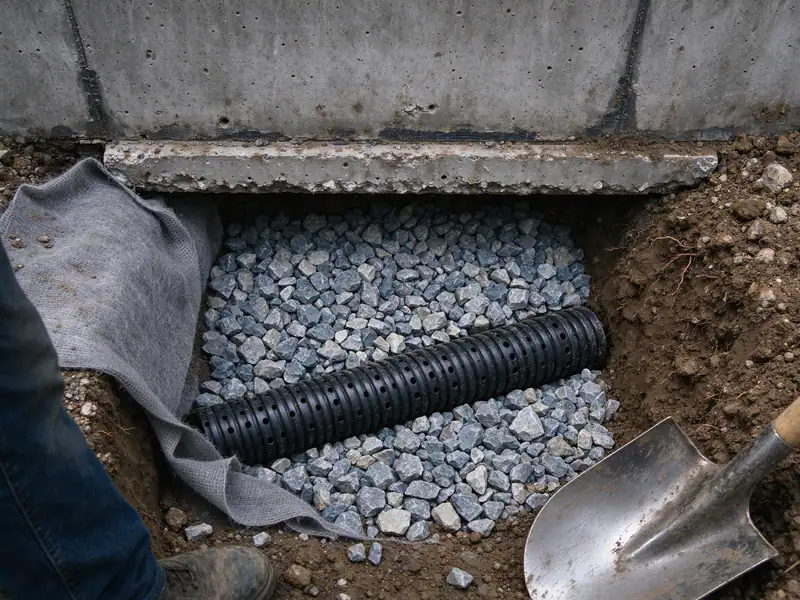
Retaining Wall Drainage Repair
Weep holes, perforated pipe and clean-stone drainage zones that take the water pressure off the wall.
How a Manhattan wall repair moves from report to closeout.
- 01
Call or send photos
Tell us the street and what the wall is doing. Manhattan visits are scheduled in blocks to keep travel off your bill.
- 02
Free site visit
Measured height, length and lean, a crack map, a drainage check and a DOB records lookup for the lot.
- 03
Written scope and price
Repair, stabilize or rebuild, with engineering, permit and any zoning-district review spelled out.
- 04
Build and closeout
Clean site, before-and-after photos, and the paperwork your inspector or insurer will ask for.
Manhattan is where the inspection law began.
On May 12, 2005, the private retaining wall below the Castle Village co-op in Hudson Heights collapsed onto the Henry Hudson Parkway. The Board of Inquiry that followed recommended that DOB propose legislation requiring licensed professionals to inspect retaining walls on a regular cycle, and the result was Local Law 37 of 2008, now Admin Code §28-305.4. Sources disagree on the wall's height, from about 50 to 75 feet, but not on the cost: reconstruction ran about $24 million and was substantially complete by October 2007 (Wikipedia; STRUCTURE magazine). Two lessons from Castle Village still drive Manhattan work. A public right-of-way includes highways and parkways, not only sidewalks. And the walls that matter most are often the ones nobody looks at from the street.
The ground explains where those walls are. Manhattan schist rises to the Washington Heights escarpment, the highest ground in Manhattan, while the softer Inwood marble has eroded into the lowlands from Dyckman Street to Marble Hill (NYC Parks). Buildings, stairs and parkways were cut into the edge of that ridge, and tall stone and concrete walls hold the difference. The data follows the ridge: uptown ZIP codes 10033 (#9 citywide), 10034 Inwood (#34), 10032 (#38) and 10040 (#39) lead the borough, joined by 10025 along Riverside Drive (#37). Borough-wide, Manhattan logged 326 permitted wall jobs, 302 properties with an inspector-confirmed wall problem and 159 LL37-cited tax lots since 2015, and 205 Cycle 1 failure-to-file violations (NYC Open Data). Repairs here are usually repointing with a mortar matched to the old wall, resetting or replacing stone, restoring drainage, and tieback anchors drilled into rock where a section has moved, all to an engineer's plans and a DOB permit. See Washington Heights for the neighborhood detail.
Shared walls are the uptown complication. In March 2011, DOB declared a roughly 10-foot wall shared by 11 buildings on Park Terrace West, Seaman Avenue and West 218th Street in Inwood unsafe, partially vacated the garages and yards below it, and stated that everyone abutting the wall was responsible (DNAinfo). On a common lot line, owners split the work half each under Admin Code §28-305.1.1, and on an LL37 wall each owner pays its own filing fee even when one report covers the whole wall. Manhattan's Cycle 3 window closed on December 31, 2025; the next is 2030. We don't sign LL37 reports. We can connect a board with an independent Qualified Retaining Wall Inspector, then price and build the repairs that report calls for, and give the inspector what's needed for the amended filing. Our SREM rating guide explains the timelines.
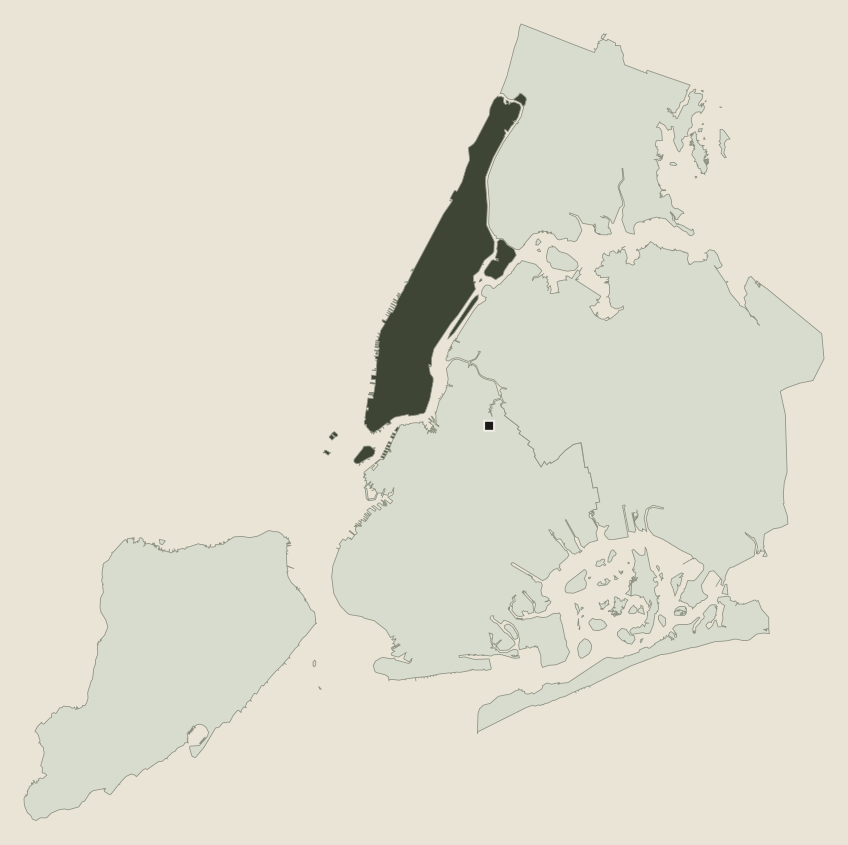 Open Manhattan in Google Maps ↗
 Manhattan owner guides
Why Manhattan owners call NYC Retaining Walls.
- 01
Retaining walls are the focus
Site visits, estimates and repairs here are about one thing: walls that hold back soil — how they're drained, footed, reinforced and filed.
- 02
Numbers on the first visit
Measured height, length and lean, a crack map and a DOB records check — not a guess from the curb.
- 03
A written, line-item price
Repair, stabilize or rebuild, priced side by side, with engineering and permit steps spelled out.
- 04
Licensed and insured
Licensed and insured for home improvement work in New York City, and we build to stamped plans when the code calls for them.
How we reach you in Manhattan.
From 27 Knickerbocker Ave in Brooklyn we cross the Williamsburg Bridge and run up the FDR Drive and the Harlem River Drive to Washington Heights and Inwood, or take I-278 over the Robert F. Kennedy Bridge when the East Side is jammed. The Henry Hudson Parkway and Riverside Drive cover the Hudson side. Uptown jobs often need parking, staging or sidewalk permits, so we plan those before the work starts. Every Manhattan property gets a site visit within 3 business days of your call.
Manhattan neighborhoods we cover
- Inwood
- Washington Heights
- Hudson Heights
- Fort George
- Hamilton Heights
- Sugar Hill
- Harlem
- Morningside Heights
- Manhattan Valley
- Upper West Side
- Marble Hill
Near landmarks like
- The Cloisters
- Fort Tryon Park
- Inwood Hill Park
- Highbridge Park
- George Washington Bridge
- Riverside Park
- Morningside Park
Routes we use
- Williamsburg Bridge
- FDR Drive
- Harlem River Drive
- Henry Hudson Parkway
- Riverside Drive
- Broadway
Transit: the A, C and 1 trains.
Manhattan retaining wall questions.
When is the next Manhattan Local Law 37 inspection due?
Manhattan's Cycle 3 window ran January 1 to December 31, 2025, and the next window is 2030. If your building's 2025 report was never filed, it is late now: under the current rule, failure to file is $5,000 a year and late filing adds $1,000 a month. A Qualified Retaining Wall Inspector, a New York–licensed engineer, files the report within 60 days of the inspection, with a $355 DOB fee.
What does retaining wall repair cost in Manhattan?
Manhattan wall repairs are priced job by job because the walls are large and access is hard. One NYC Parks permit at 5001 Broadway in Inwood, replacing a rubble-stone wall with concrete, was filed at about $600,000. For smaller scopes, our NYC working bands, national guides times the RSMeans NYC index of 129.1, are about $325 to $1,600 for minor repair, $75 to $105 per linear foot for anchoring and $90 to $160 per linear foot to rebuild.
Our building's wall was rated SREM. How long do we have?
SREM means the wall needs repairs, engineering monitoring or both within no more than one year. A wall can't be rated SREM in two consecutive cycles unless the repairs are certified, and an SREM condition still uncorrected at the next inspection must be reported Unsafe, with a $2,000 penalty under 1 RCNY §103-09. Fixing it well before 2030 keeps the next report clean.
Can our co-op's architect do the Local Law 37 inspection?
No. Under 1 RCNY §103-09, the condition assessment must be done by a Qualified Retaining Wall Inspector, defined in 1 RCNY §101-07 as a New York–licensed professional engineer with three years of relevant experience on walls over 10 feet. A registered architect cannot sign the report. An architect can still design or manage the repair work once the inspector's report is filed.
Who coordinates repairs on a wall shared by several Manhattan buildings?
The owners do, together. On a common lot line each owner is responsible for half the cost (Admin Code §28-305.1.1), and owners may make private agreements that divide it differently (§28-305.3). In practice one board or managing agent leads, the engineer prepares one set of plans, and each owner files and pays its own LL37 fee. We price the work so each owner's share is shown.
Book a free Manhattan site visit
Thanks, we have your request.
Callback within 1 business hour. If it's urgent, call (718) 555-0100.
Nearby service areas.
-
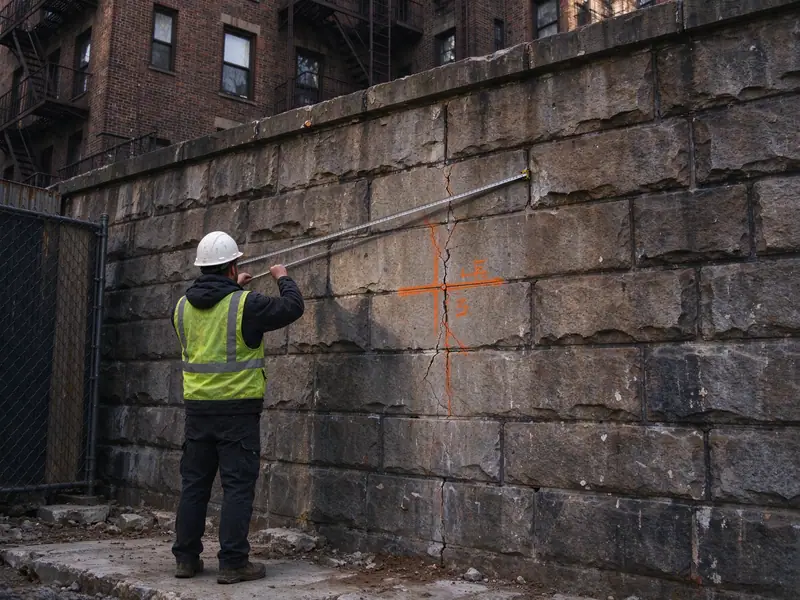
Washington Heights
Co-op and apartment walls on the schist ridge where Local Law 37 began.
-
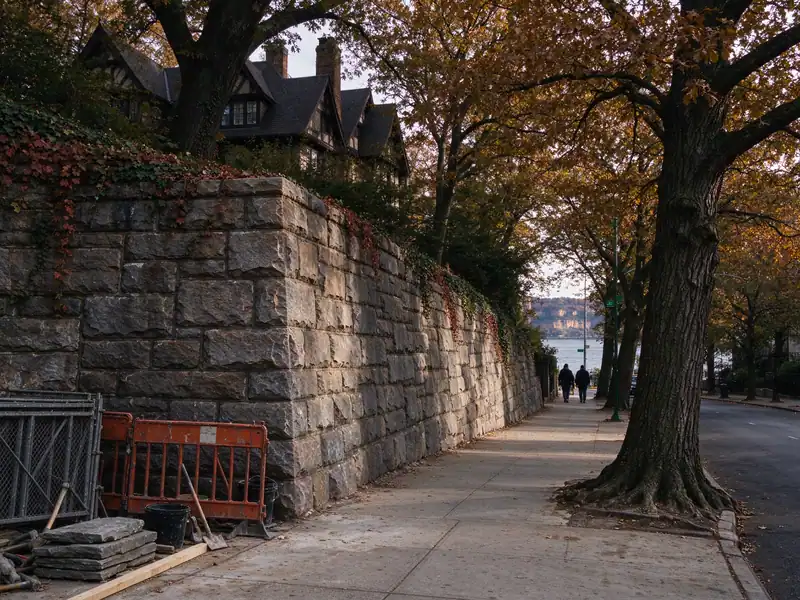
The Bronx
Rock-ridge walls, co-op and apartment walls, and the most LL37 enforcement in the city.
-
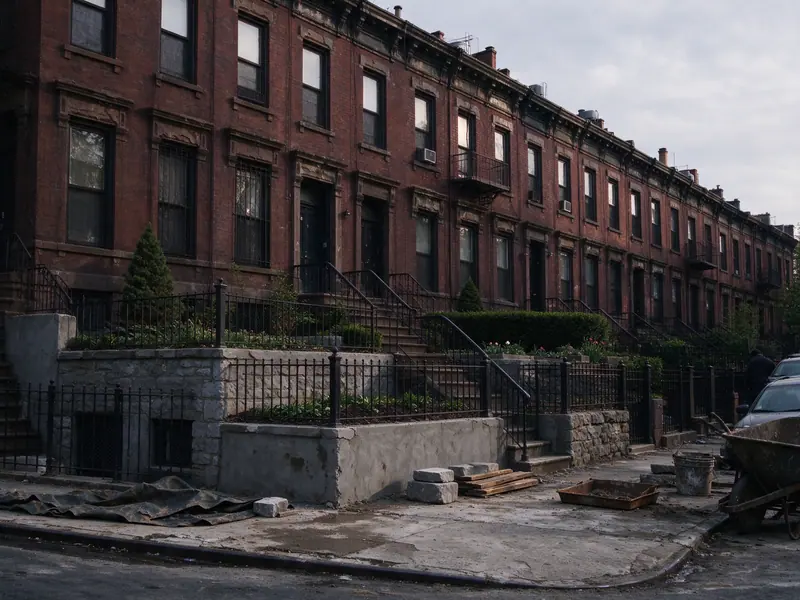
Brooklyn
Rowhouse rear-yard walls, subway-cut walls, and the ridge from Green-Wood to Bay Ridge.
Sources
- STRUCTURE magazine — Periodic inspection of retaining walls
- DNAinfo — Unsafe retaining wall threatens Inwood block (Apr 2011)
- NYC DOB — 1 RCNY §103-09 (Retaining wall inspection rule, Mar 2025)
- NYC Open Data — DOB Job Filings, Violations and Safety Violations
- Sinra — DOB permit record, 5001 Broadway, Manhattan
Retaining wall work in Manhattan?
We call you back within 1 business hour during business hours (Mon–Sat, 7am–7pm) and schedule a free site visit within 3 business days.