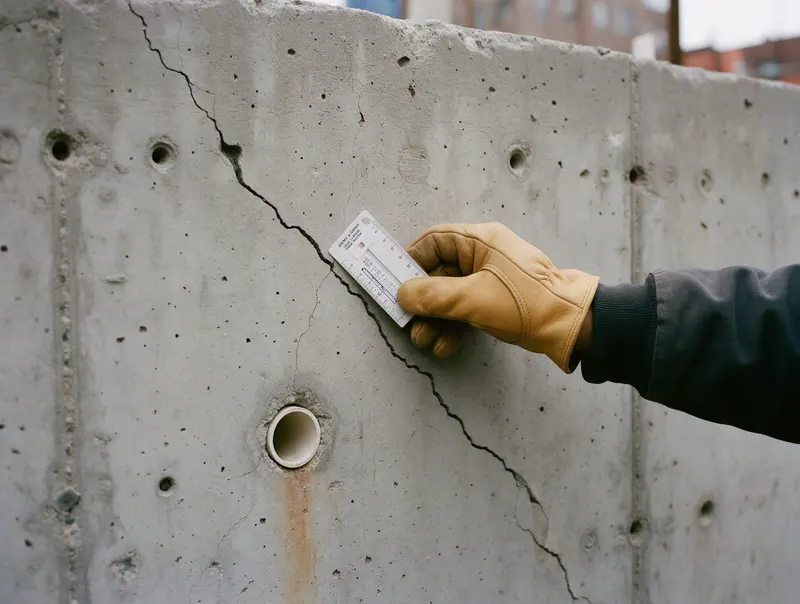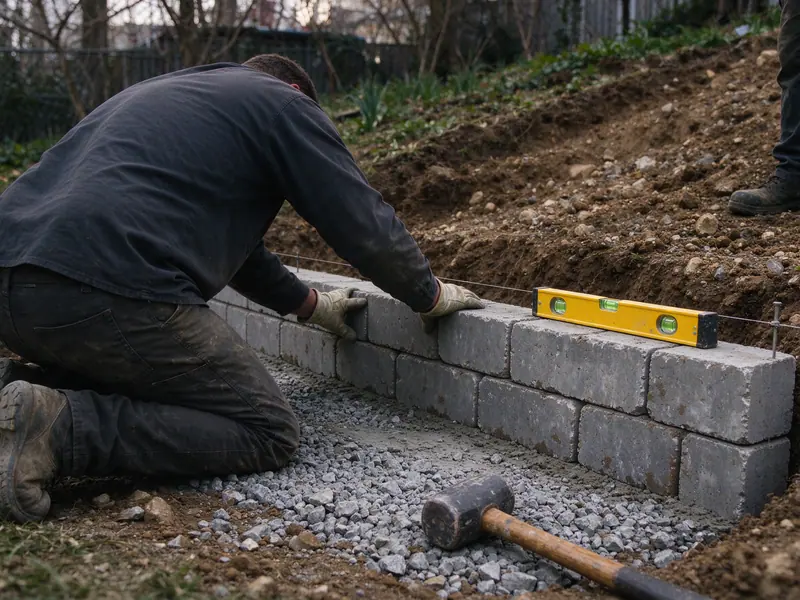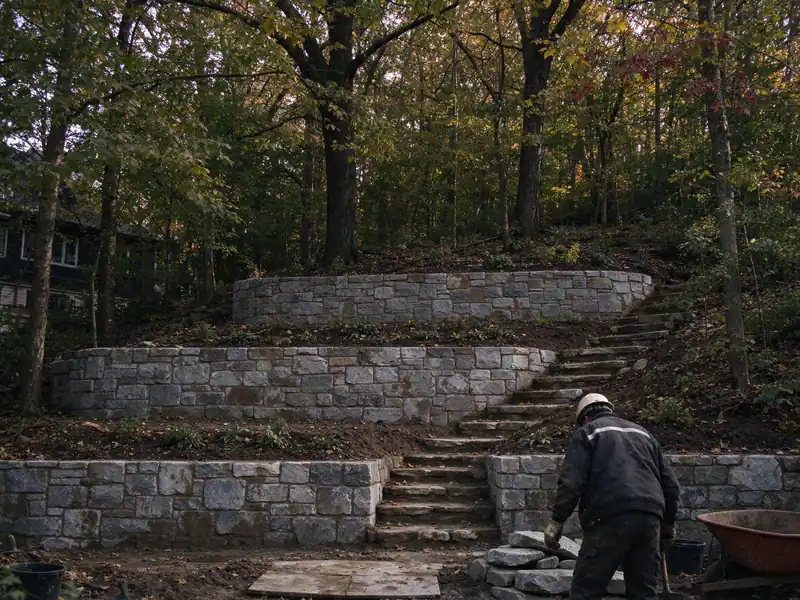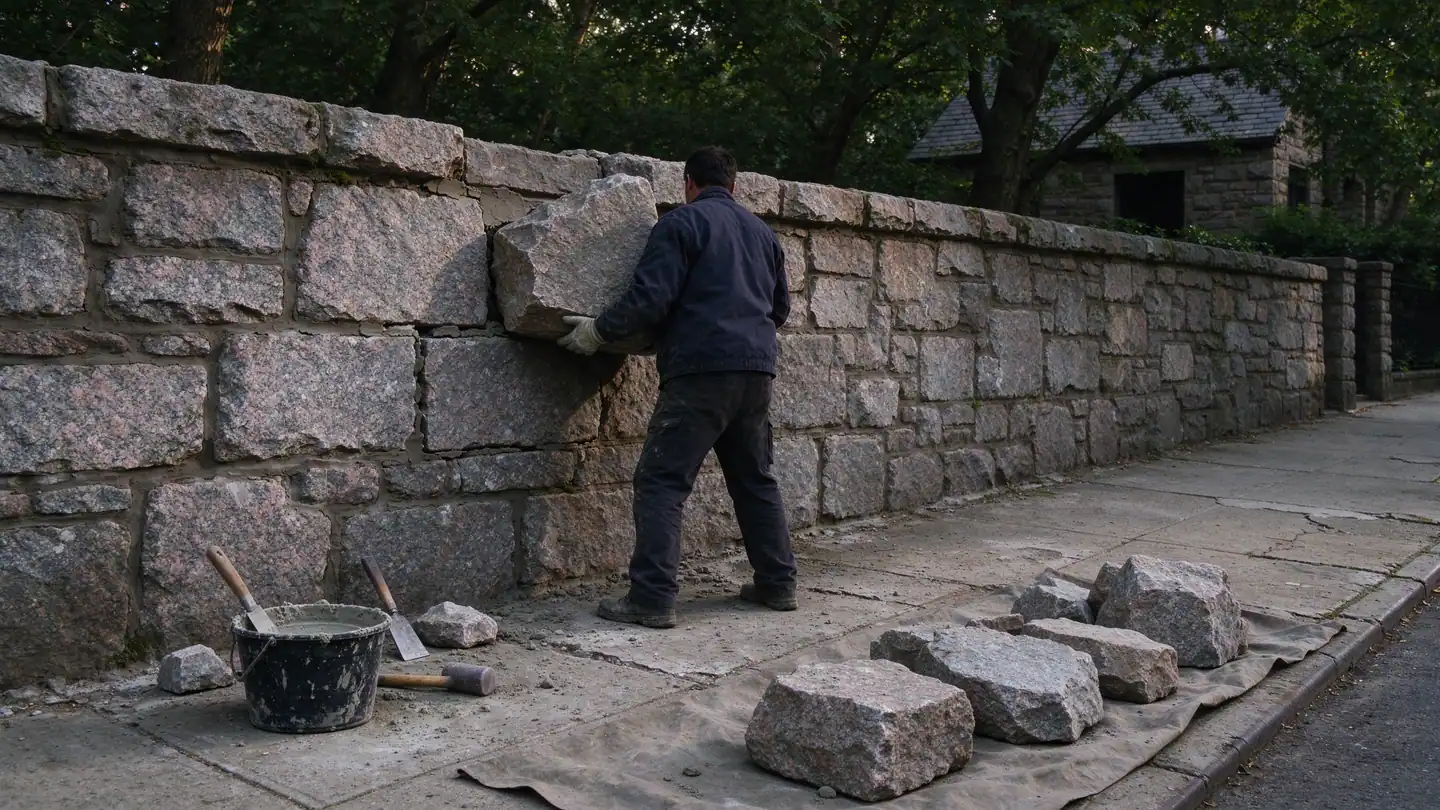
NYC Retaining Walls is a licensed and insured retaining wall contractor that repairs, rebuilds and builds stone retaining walls across the five boroughs — mortared rubble walls along Riverdale and Bay Ridge sidewalks, fieldstone walls on Staten Island's hills, dry-laid garden walls, and stone veneer over new concrete. A stone retaining wall in NYC is often the oldest structure on the lot, and it usually fails slowly: mortar washes out of the joints, water gets in and freezes, stones loosen and fall, and the wall behind the face starts to bulge. Caught early, most of that is repair work. Left alone, it becomes a rebuild.
What we do on the first visit
The first visit is free and takes about 45 minutes:
- We identify how the wall was built — mortared or dry-laid, coursed or random rubble, solid stone or a stone face over concrete or brick — because each is repaired differently.
- We measure height, length and lean at several points, and tap the face for hollow-sounding areas where the face has separated from the core.
- We map joint and stone condition — open or eroded joints, cracked or missing stones, earlier repairs in hard gray cement mortar, and plants rooted in the wall.
- We check drainage — weep holes, wet staining, efflorescence, and soil washing out at the toe.
- We look at the stone itself so replacement stone can be matched in type, color and size, and note whether the property is in a historic district.
- You get a written scope and price — repoint, reset, rebuild a section or rebuild the wall — usually within two business days.
NYC's stone walls and how they fail
The city's old walls were mostly built from what was at hand, so the stone varies by neighborhood. Upper Manhattan walls are often Manhattan schist, a glittery, layered gray rock; walls on the Riverdale and Grand Concourse ridges often use Fordham gneiss; Staten Island's hills have serpentinite ledges and glacial fieldstone; and many walls everywhere are capped with bluestone slabs or edged with granite Belgian block.
Three things wear them out:
- Mortar loss. Rain and freeze-thaw erode joints over decades. Central Park averages about 78 days a year below freezing, and each freeze in a wet joint pries at the stone.
- The wrong repair mortar. Joints repointed with hard, dense cement mortar trap water in the softer stone or old mortar around them, so the stone cracks or spalls instead of the joint. The standard preservation guidance is that new mortar should be no harder or less permeable than the masonry it joins.
- No drainage. Many old walls were built with no weep holes and no drainage stone behind them. Water pressure builds behind the wall and pushes the face out, which shows up as bulging and stones dropping from the middle of the wall.
Roots are a fourth, slower force. Trees and vines that take hold in open joints widen them every season, and pulling a large root out of a wall can bring stones with it, so roots are cut back and treated before the joints are repointed.
Repointing, resetting and rebuilding
We recommend the smallest repair that stops the deterioration.
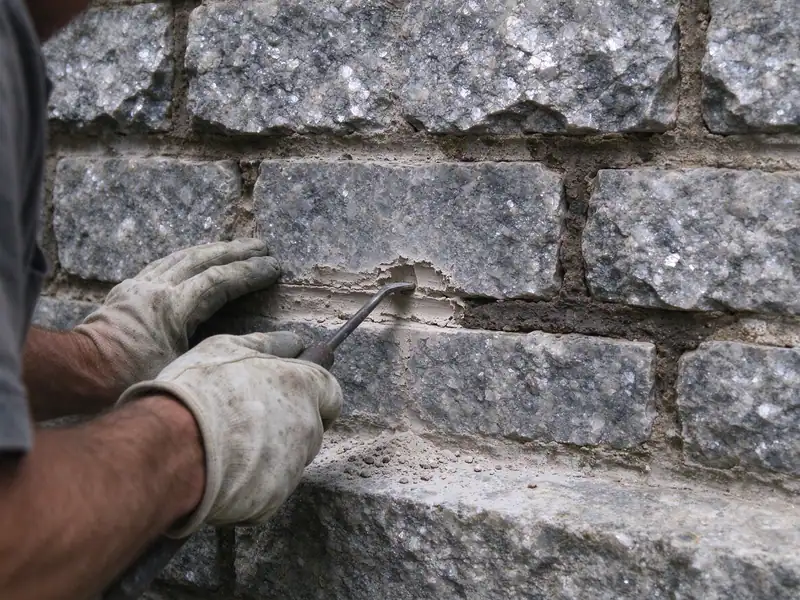
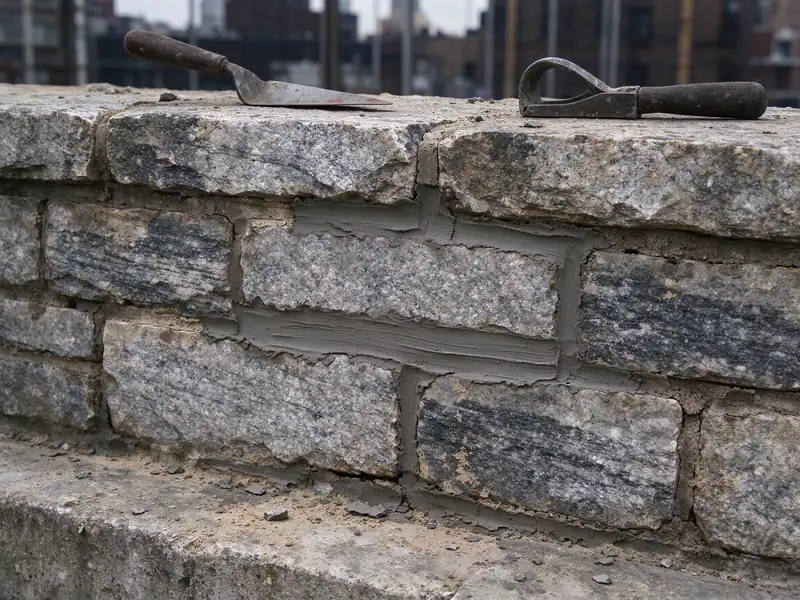
- Repointing. Raking out deteriorated mortar to a consistent depth, then packing new mortar in layers and tooling it to match the existing joints. The mortar is chosen to suit the stone and the original mortar, not just what's in the truck.
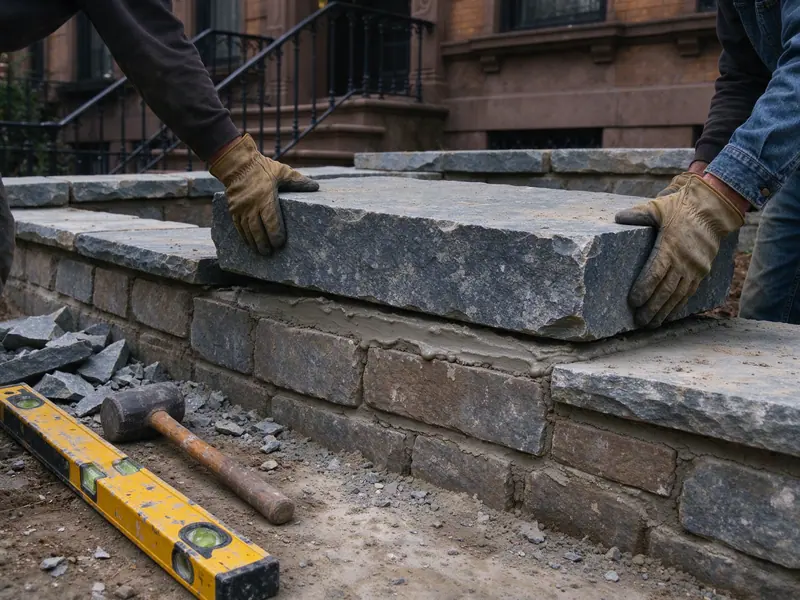
- Resetting. Loose or fallen stones are removed, the bed cleaned, and the stones reset in fresh mortar or, in a dry-laid wall, rechinked and wedged tight.
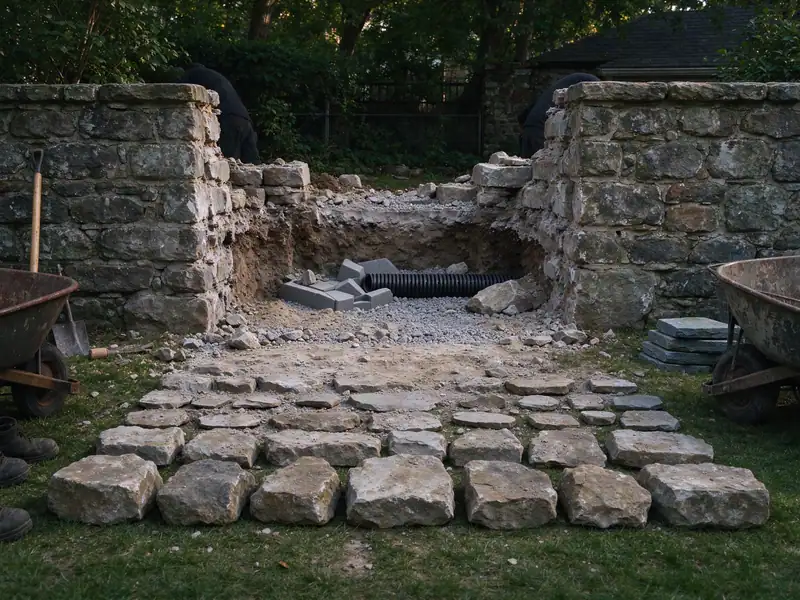
- Section rebuild. Where the face has bulged or separated, that section is taken down stone by stone, with the stones kept in order, then rebuilt on a sound base with weep holes and clean drainage stone behind it.
- Full rebuild or veneer. When a tall stone wall has to carry real load, it may be rebuilt as reinforced concrete with the original stone set as a veneer. It keeps the look and gives the wall an engineered structure. See concrete retaining walls.
For walls that are leaning but still intact, anchoring may be an option; see leaning retaining wall repair. For general crack and drainage repairs, see retaining wall repair.
Permits, landmarks and new stone walls
Repointing and resetting a few stones generally don't need a filing. Rebuilding a stone wall 4 feet or taller from the top of the footing, or one that carries a surcharge, needs a DOB permit with plans by a licensed engineer or architect (1 RCNY §101-14). We build to the stamped plans and coordinate the filing. If the property is in a designated historic district or is an individual landmark, visible exterior work may also need Landmarks Preservation Commission approval, so check before work starts.
Tall stone walls on sidewalks are common in older hillside neighborhoods. If any part is 10 feet or taller and fronts a public right-of-way, it falls under the Local Law 37 five-year inspection program; see retaining wall inspection.
What stone wall work costs in NYC
New natural stone walls in NYC typically run about $26 to $120 per square foot of wall face — HomeGuide's national $20–$95 range (2026) adjusted by the RSMeans New York City cost index of 129.1. The range is wide because stone is: reclaimed fieldstone set dry in a garden wall is at the low end, and cut, mortared stone or veneer over a reinforced core is at the high end. Repairs such as repointing a section or resetting loose stones typically fall in the minor-repair band of about $325 to $1,600 (Fixr, January 2025, × 1.29); Fixr's own stone-repair figure is $300–$1,600 nationally.
Matching stone is often the hidden cost. Schist, gneiss and old fieldstone aren't stocked by most suppliers, so salvaged stone from the wall itself, or from a demolished section, is the best match. Engineering for a rebuild that needs plans typically adds about $450 to $970 (HomeAdvisor × 1.29). Our repair cost guide breaks down repair pricing, and the repair vs. replacement guide helps decide when rebuilding a section beats repointing the same joints every few years.
Every job gets a written contract with scope, price and payment schedule before work starts, as New York's General Business Law §771 requires for home improvement work over $500.
What's included
- ✓Free site visit with measured height, length and lean
- ✓Joint, stone and hollow-face condition map
- ✓Mortar selected to suit the stone and original mortar
- ✓Stone matched by type, color and size
- ✓Line-item price: repoint, reset, section or full rebuild
- ✓Weep holes and drainage stone added on rebuilt sections
- ✓Engineer and DOB filing coordination when required
- ✓Closeout photos for your records
DIY vs. cheap operator vs. a wall built properly
| Factor | DIY | Cheap operator | Built properly |
|---|---|---|---|
| Drainage behind the wall | Native soil backfill | A little gravel, no pipe | 12 in+ of clean crushed stone, filter fabric, perforated pipe that daylights |
| Footing | Set on topsoil or sod | Shallow, uncompacted | Compacted base, sized and set below the frost line to the design |
| Reinforcement | None | None | Geogrid or rebar to an engineer's design where height and load call for it |
| Permit and engineer (walls 4 ft+ or surcharged) | Skipped | Skipped or "not needed" | Stamped plans and a DOB filing |
| Local Law 37 (10 ft+ on a right-of-way) | Unknown | Ignored | Built and documented so the QRWI report goes smoothly |
| Paperwork you keep | None | A handwritten estimate | Written contract, line-item scope, closeout photos |
| Where it usually fails | First freeze-thaw seasons | Within a few years, at the drainage | Designed to carry its load for decades |