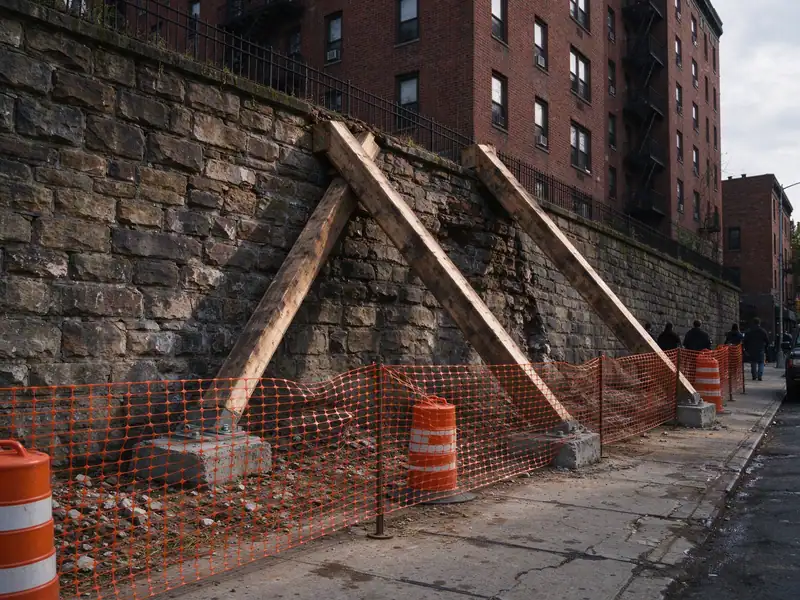
NYC Retaining Walls is a licensed and insured retaining wall contractor that helps owners through retaining wall inspection in NYC under Local Law 37 of 2008. Be clear on the roles: the inspection itself — the condition assessment and the TR16 filing with the Department of Buildings — must be performed and signed by a Qualified Retaining Wall Inspector (QRWI), a New York–licensed professional engineer with at least three years of experience with retaining walls over 10 feet. A contractor can't sign it, and neither can an architect. What we do is everything around it: confirm whether your wall is covered, connect you with an independent QRWI if you don't have one, prepare the wall so the inspector can see what they need to, and carry out the repairs the report requires.
What we do on the first visit
The first visit is free and takes about 45 minutes. For an inspection-cycle owner it answers four questions:
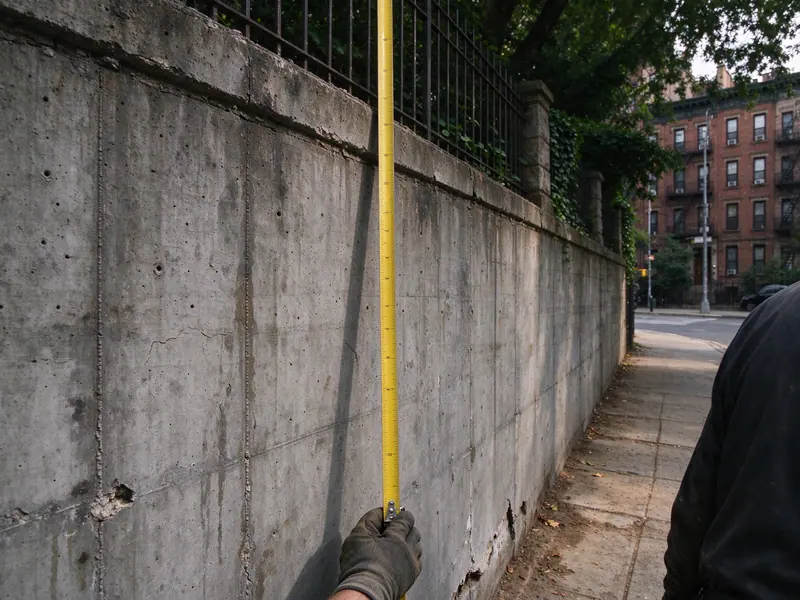
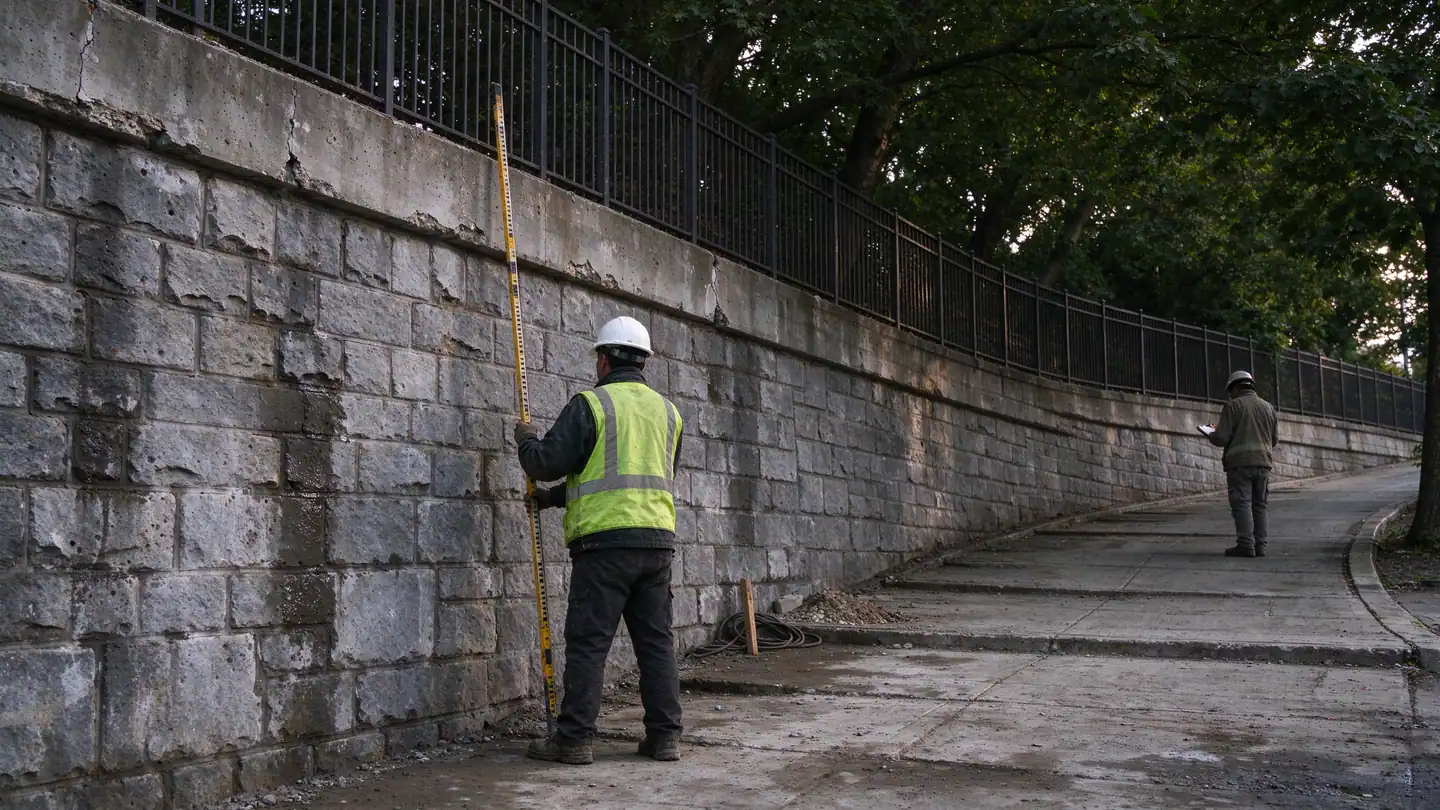
- Is the wall covered? We measure the height at its tallest point, from the ground in front of the wall to the top, including any parapet or fence that holds back material, and look at what it fronts. A wall 10 feet or taller at any point that fronts a public right-of-way is in the program (Admin Code §28-305.4).
- What do DOB records say? We check the property on the DOB Building Information System for the retaining-wall flag, earlier TR16 filings and their ratings, and any open failure-to-file violations.
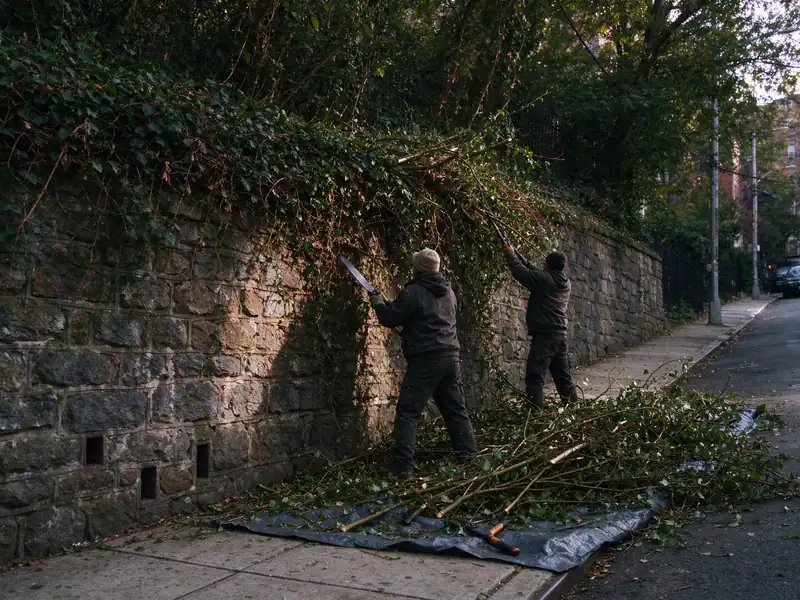
- What will the inspector need? Clear access along the face and top, vegetation cut back from the wall, weep holes and drain outlets exposed, and any drawings, surveys or prior reports gathered in one place.
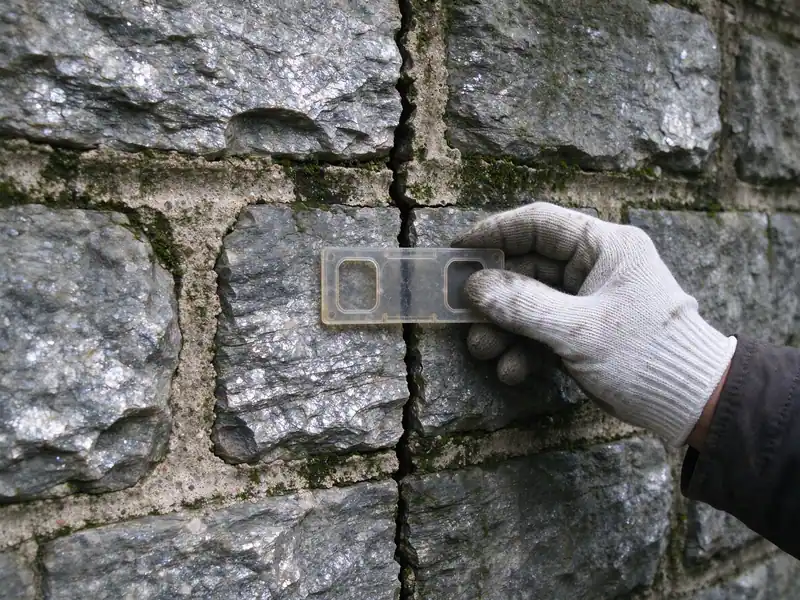
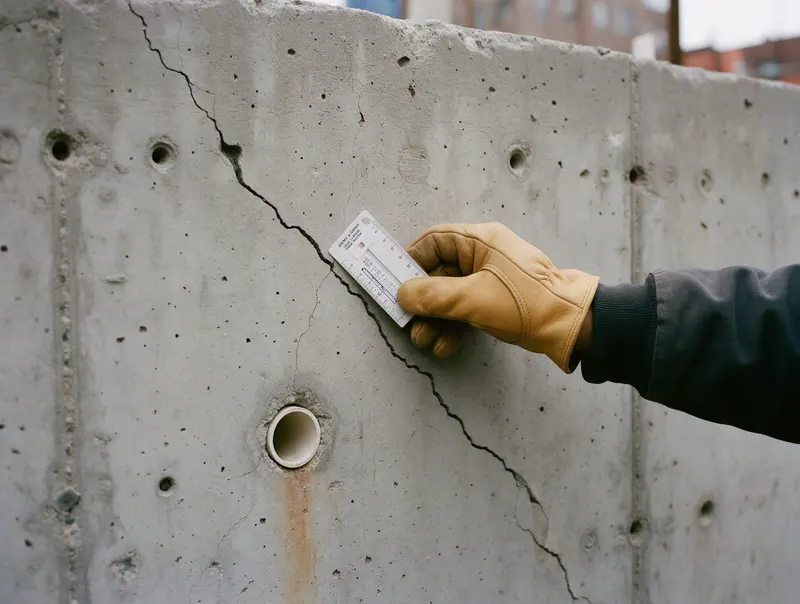
- What does the wall look like now? We note cracks, lean, bulging, drainage problems and missing material, so you know before the inspection what kind of repairs a report may call for.
You leave with a written prep list and, if you need one, an introduction to an independent QRWI.
Which walls Local Law 37 covers
Local Law 37 exists because of a failure. On May 12, 2005, the private Castle Village retaining wall in Hudson Heights collapsed onto the Henry Hudson Parkway, and the Board of Inquiry that followed recommended periodic inspections by licensed professionals.
The rule (1 RCNY §103-09) applies to walls 10 feet or more in height at any point that front a public right-of-way — defined broadly as a public highway, railroad, street, avenue, alley, public driveway, sidewalk, roadway or any other public place. Per DOB's FAQ, a wall that ranges from 4 to 12 feet is covered, and so is a wall on private land, such as one beside a parking lot or courtyard, if an unaffiliated member of the public can freely walk up to it. Height counts parapets and fencing that retain material, not just the soil.
Covered walls are inspected every five years, in a borough-by-borough window. Cycle 3 runs 2024–2028: the Bronx filed in 2024 and Manhattan in 2025; Staten Island's window is open now and closes December 31, 2026; Queens follows in 2027 and Brooklyn in 2028. Each window repeats every fifth year. The Local Law 37 guide and the Staten Island deadline guide cover the rule and the dates.
What the inspection involves, and where we fit
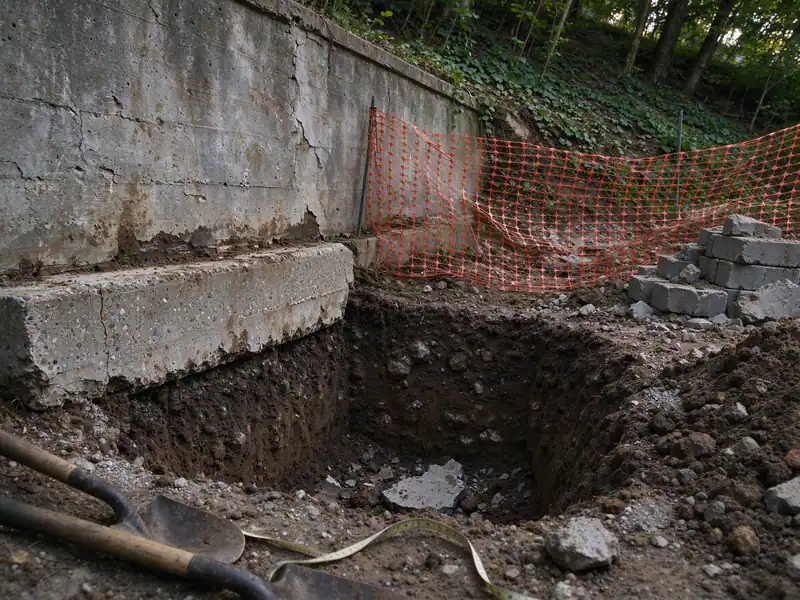
A Local Law 37 assessment is real engineering, not a walk-by. DOB's FAQ says an inspector can't simply assume dimensions for a wall with no drawings: probes, cores or test pits, at least one cross-section and supporting calculations are expected, and steep slopes call for a global stability analysis. The QRWI then files the TR16 report within 60 days of the inspection with one of four ratings: Safe; Safe with minor repairs or maintenance; Safe with Repairs and/or Engineering Monitoring (SREM); or Unsafe.
Our part:
- Before: clearing vegetation and debris, exposing drain outlets, opening access, and providing a crew if the inspector wants a test pit dug at the toe.
- After: pricing and carrying out the repairs the report lists, to the inspector's specifications and, where needed, engineer-stamped plans and a DOB permit. An SREM condition must be addressed within the timeframe the report sets, no more than a year; an Unsafe condition must be corrected within 90 days. See retaining wall violation repair.
- Closeout: photos and documentation for the QRWI's amended report.
Common items on a repair list — clogged weep holes, open mortar joints, vegetation rooted in the wall — fall within retaining wall repair and drainage repair.
Shared walls, railroad frontage and other edge cases
A few situations come up often enough in DOB's own FAQ to plan for.
- Lot-line walls. A wall on the common lot line is the joint responsibility of both owners, half the cost each, unless they agree otherwise (Admin Code §28-305.1.1). One QRWI can inspect and report on the whole wall, but each owner pays DOB's filing fees. See shared retaining wall repair.
- Walls along railroad or subway cuts. If you believe the wall belongs to the railroad, DOB asks for a signed and sealed survey with form RWIP-11. In 2019, Brooklyn owners along the subway open cuts received DOB violations for walls that New York City Transit later took responsibility for.
- Taking a wall out of the program. DOB's FAQ says an engineer may lower the non-retaining portion of a wall, such as a parapet, below 10 feet — permitted work that we can build to the engineer's plans. A private lot can also stop being publicly accessible, for example with a gate kept closed.
None of these changes the deadline while the question is open, so start early.
Inspection fees, deadlines and penalties
There is no published price for a Local Law 37 inspection, and we won't invent one. The QRWI sets the fee, and it is driven by the wall's length and height, access, whether drawings exist, how many test pits or cores are needed, and whether a slope stability analysis is required. DOB's own filing fees are fixed: $355 for an initial report, $130 for an amended report and $260 for an extension request. When one report covers a wall shared by several lots, each owner pays the filing fees. Our inspection cost guide lists what moves the inspector's price.
Missing the window is expensive. Under the amended rule that took effect March 23, 2025 (1 RCNY §103-09), failure to file carries a $5,000 per year penalty, late filing an additional $1,000 per month, failure to correct an Unsafe condition $1,000 per month, and an SREM condition left uncorrected until it is reported Unsafe a one-time $2,000. DOB's web page still shows older, lower amounts; the rule text controls.
Repairs found by the inspection are priced like any other work: minor repairs in NYC typically run about $325–$1,600 (Fixr, January 2025, × RSMeans NYC index 129.1), with a written line-item contract before work starts.
What's included
- ✓Free coverage check: height, frontage and DOB records
- ✓Introduction to an independent QRWI if you need one
- ✓Written prep list before the inspection
- ✓Vegetation, debris and drain-outlet clearing
- ✓Crew for test pits or access on inspection day
- ✓Line-item price for repairs the report requires
- ✓Repairs scheduled against SREM and Unsafe deadlines
- ✓Closeout photos for the amended report
DIY vs. cheap operator vs. a wall built properly
| Factor | DIY | Cheap operator | Built properly |
|---|---|---|---|
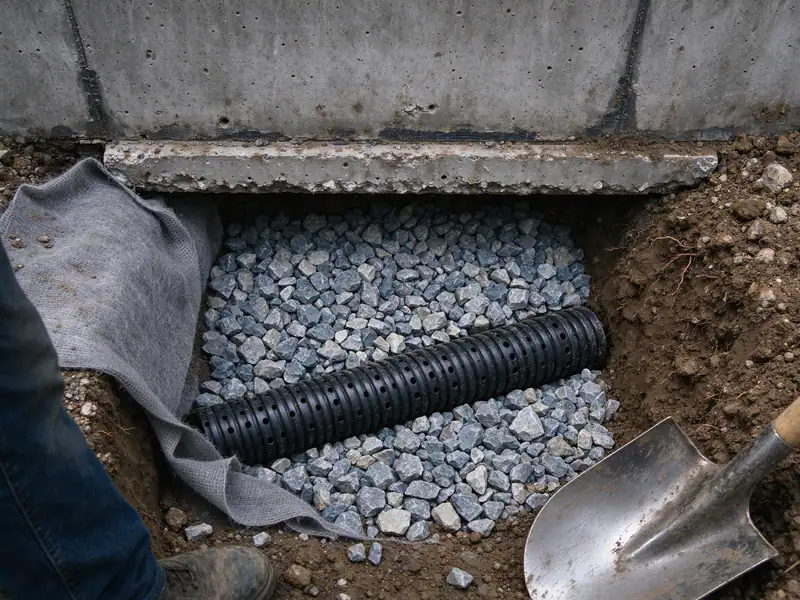
| Drainage behind the wall | Native soil backfill | A little gravel, no pipe | 12 in+ of clean crushed stone, filter fabric, perforated pipe that daylights |
| Footing | Set on topsoil or sod | Shallow, uncompacted | Compacted base, sized and set below the frost line to the design |
| Reinforcement | None | None | Geogrid or rebar to an engineer's design where height and load call for it |
| Permit and engineer (walls 4 ft+ or surcharged) | Skipped | Skipped or "not needed" | Stamped plans and a DOB filing |
| Local Law 37 (10 ft+ on a right-of-way) | Unknown | Ignored | Built and documented so the QRWI report goes smoothly |
| Paperwork you keep | None | A handwritten estimate | Written contract, line-item scope, closeout photos |
| Where it usually fails | First freeze-thaw seasons | Within a few years, at the drainage | Designed to carry its load for decades |
Related resources
- What Are the Local Law 37 Retaining Wall Requirements?
- When Is the Staten Island Retaining Wall Inspection Deadline?
- How Much Does a Retaining Wall Inspection Cost in NYC?
- What Does an SREM Retaining Wall Rating Mean?
- How Do I Clear a Retaining Wall Failure to File Violation?
- Retaining Wall Next to Subway Tracks: Who Is Responsible?