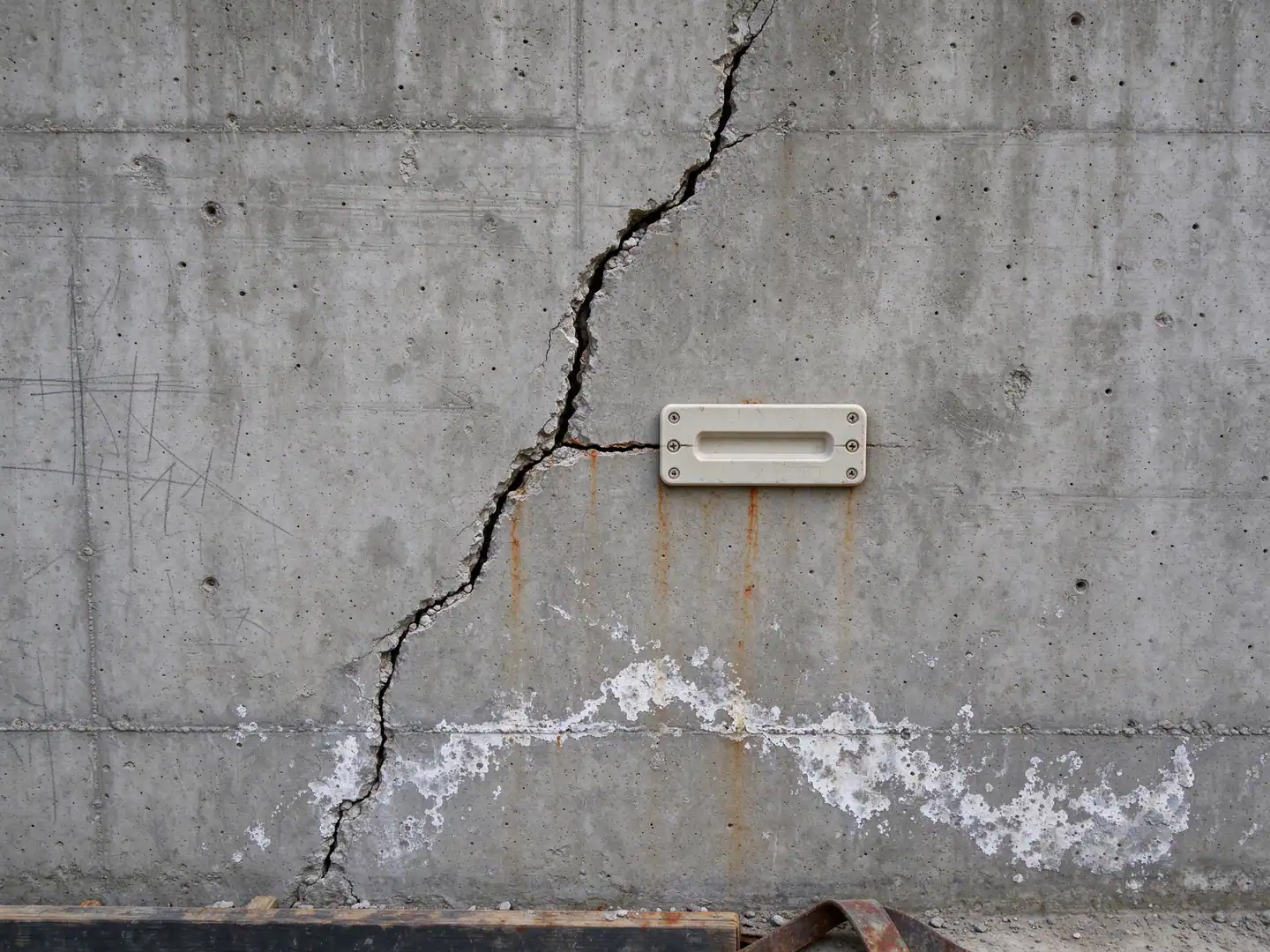
An SREM retaining wall rating — Safe with Repairs and/or Engineering Monitoring — means a Qualified Retaining Wall Inspector found conditions that need repair or monitoring within no more than one year. It isn't an emergency, but it can't stay SREM: uncorrected at the next inspection, the wall must be rated Unsafe, and a $2,000 penalty applies.
- SREM = Safe with Repairs and/or Engineering Monitoring, needed within no more than one year (1 RCNY §103-09).
- A wall can't be rated SREM at the same location in two consecutive cycles unless repairs are certified (Admin Code §28-305.4.8.1).
- SREM left uncorrected and later rated Unsafe: $2,000 one-time penalty (rule effective Mar 23, 2025).
- Unsafe walls must be corrected within 90 days, or $1,000 a month accrues, prorated daily.
NYC Retaining Walls is a licensed and insured retaining wall contractor that repairs walls to the findings of Local Law 37 reports, including the work behind an SREM retaining wall rating. SREM stands for Safe with Repairs and/or Engineering Monitoring. It’s the third of the four ratings a Qualified Retaining Wall Inspector (QRWI) can give in a TR16 report, and under 1 RCNY §103-09 it means repairs or engineering monitoring are needed within no more than one year. The repair work itself is covered on our retaining wall violation repair page.
Where does SREM sit among the four ratings?
| Rating | Meaning | Deadline |
|---|---|---|
| Safe | No action needed | Next cycle |
| Safe with minor repairs or maintenance | Small items | Before the next inspection |
| SREM | Repairs or engineering monitoring needed | Within no more than one year |
| Unsafe | A hazard to the public or property | Notify DOB immediately (311); correct within 90 days |
What happens if you don’t fix an SREM condition?
It becomes Unsafe. The Admin Code (§28-305.4.8.1) bars rating a wall SREM at the same location in two consecutive cycles unless the repairs have been certified, and the rule requires an SREM condition still uncorrected at the next inspection to be reported Unsafe. Since March 23, 2025, that carries a one-time $2,000 penalty — and the Unsafe rating starts a 90-day correction clock, with $1,000 a month, prorated daily, if the wall isn’t fixed in time.
What does SREM usually point to?
The report spells out the specific conditions. They tend to be the same warning signs DOB lists for every retaining wall: leaning, cracks or holes in the soil or pavement at the top, swelling at the base, bulging or displaced material, water pooling behind the wall and clogged weep holes. Each has a different fix — repointing and resetting stone, crack repair, anchors for a lean, or a drainage retrofit. See leaning retaining wall repair and retaining wall drainage repair. Waiting a year makes most of them worse: Central Park averages about 78 days a year below freezing, and each freeze-thaw cycle pries at open joints and cracks where water sits.
What should you do after an SREM rating?
- Read the report closely. It names the locations and conditions; that’s the repair scope.
- Decide repair or monitoring with your QRWI. Monitoring is allowed where the inspector judges it appropriate, but it has to be documented.
- Get a written repair price against the report’s items. A contractor shouldn’t add or drop items without the engineer.
- Permit the work if required. On a wall this tall, most structural repairs need a DOB permit with stamped plans; our permit guide explains the threshold.
- Repair, then have the QRWI certify it. An amended report costs $130 to file; an extension request is $260.
What do SREM repairs cost?
It depends on what the report lists. Using Fixr’s national figures multiplied by the RSMeans NYC index (129.1): minor repairs about $325–$1,600, anchoring a leaning section about $75–$105 per linear foot, rebuilding a failed section about $90–$160 per linear foot, and a drainage retrofit about $90–$115 per square foot. The repair cost guide has worked examples, and the cost estimator gives a quick starting range. If the report points at several failing sections, compare in the repair vs. replacement guide.
Will insurance pay for SREM repairs?
Usually not. An SREM rating describes deterioration — cracking, drainage failure, gradual movement — and standard homeowners policies generally exclude wear and tear, earth movement and water pressure against retaining walls. Budget for the repair as maintenance. If a sudden event, such as a vehicle strike or a falling tree, caused the damage the inspector found, tell your carrier; the insurance guide explains where the line usually falls. Either way, the one-year SREM clock doesn’t pause for a claim.
Who pays on a shared wall?
A wall on the common lot line is a joint responsibility, half each, under Admin Code §28-305.1.1 unless the owners agree otherwise. One repair contract covering the whole SREM scope, with each owner’s share written in, usually costs less than two separate jobs; see shared retaining wall repair. If your borough’s window is coming up, the Local Law 37 guide has the dates, and Washington Heights covers the tall co-op and apartment-building walls of upper Manhattan.
An SREM rating gives you time, not a pass: get the repair scoped from your inspector's report, permitted if needed and done well inside the year. For a written price on the repairs your QRWI listed, (718) 555-0100.
Frequently asked questions.
Do I need a permit for SREM repairs?
Often, yes. Repairs on a wall 4 feet or taller from the top of the footing, or one that supports a surcharge, need a DOB permit with plans by a licensed engineer or architect under 1 RCNY §101-14 — and every Local Law 37 wall is at least 10 feet at some point. Minor surface work may not; your engineer decides what the scope requires.
Can my QRWI just monitor the wall instead of repairing it?
SREM explicitly allows engineering monitoring as an alternative where the inspector judges it appropriate — for example, tracking whether a crack or lean is changing. Monitoring isn't free or indefinite: it has to be done and documented, and the same condition can't be rated SREM again in the next cycle unless repairs have been certified.
What's the difference between SREM and Unsafe?
SREM means the wall is safe today but needs repairs or monitoring within no more than a year. Unsafe means it's a hazard now: the inspector must notify the owner and DOB immediately by calling 311, the public must be protected, and the condition must be corrected within 90 days, with $1,000 a month in penalties if it isn't.