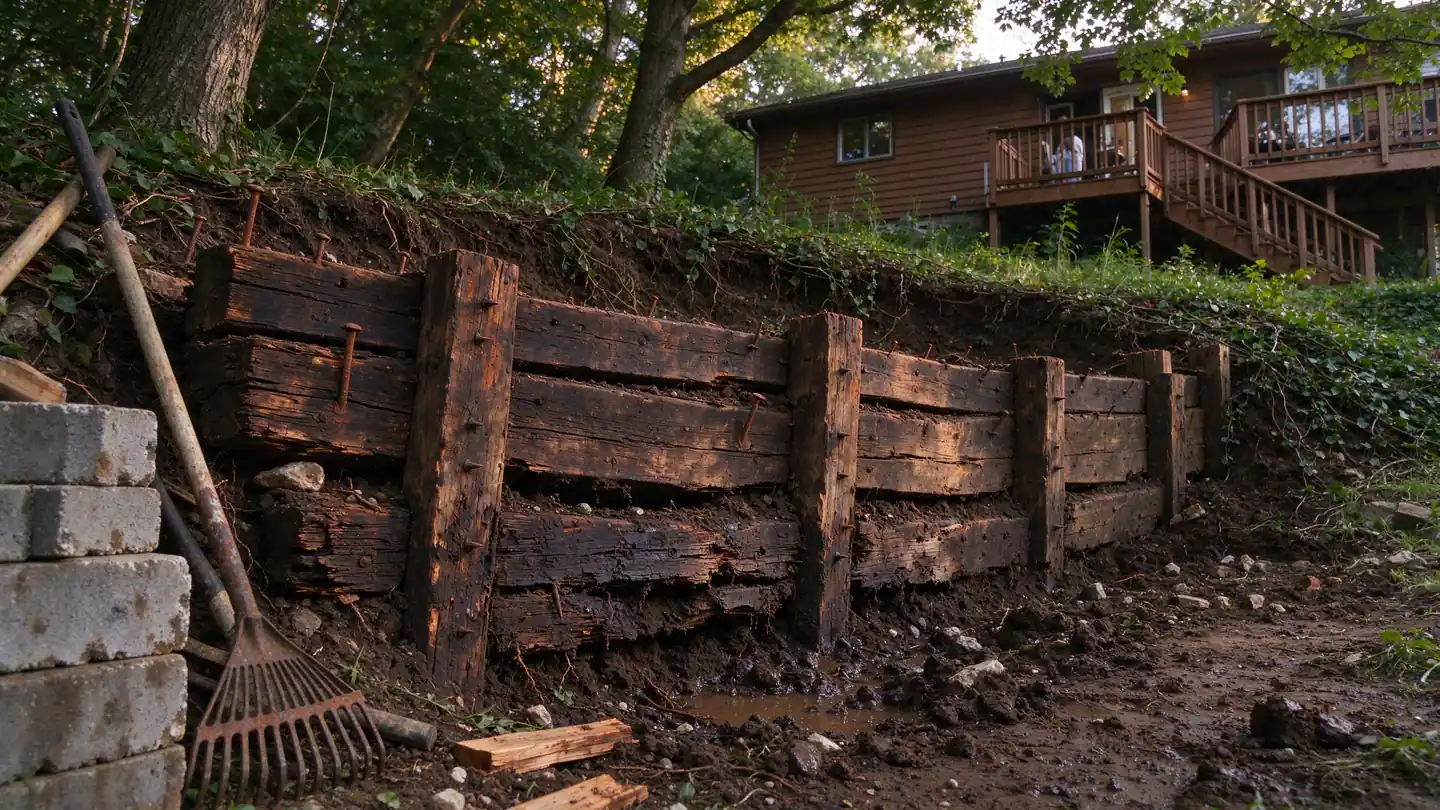
NYC Retaining Walls is a licensed and insured retaining wall contractor that handles railroad tie retaining wall replacement across the five boroughs. Walls stacked from old railroad ties and landscape timbers are a familiar sight in sloped yards on Staten Island and in northeast Queens, and they share one failure: wood in constant contact with wet soil eventually rots. Railroad tie retaining wall replacement is usually the honest answer once a timber wall leans or goes soft, because the parts that fail first — the bottom course, the back faces and the buried "deadman" ties that anchor the wall — are the parts you can't see or reach without taking the wall apart.
What we do on the first visit
The first visit is free and takes about 45 minutes:
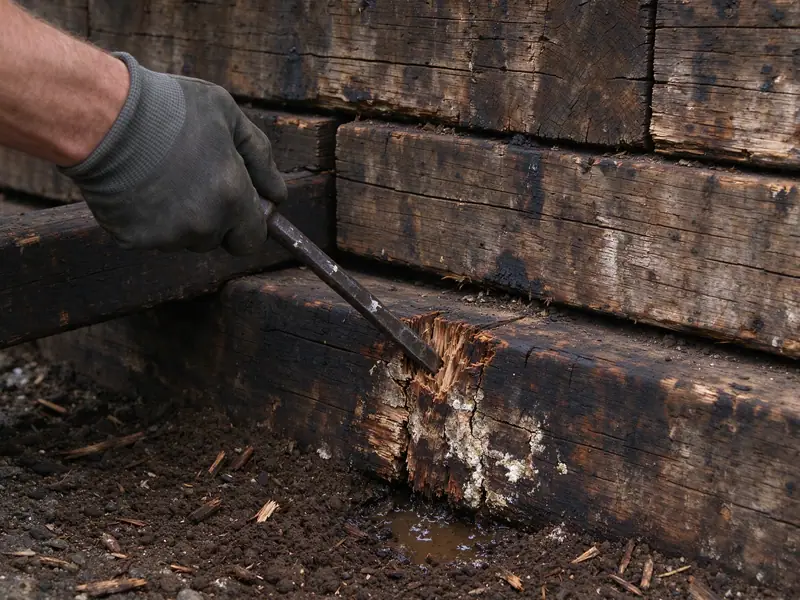
- We probe the wood. An awl pushed into the ties at the base, the corners and the ends shows how far the rot has gone. Soft, punky wood at the bottom course is the usual starting point.
- We measure height, length and lean, and look for bowing between posts and gaps where soil is leaking through.
- We look for deadmen — ties set perpendicular into the slope to anchor the face — and check whether their exposed ends have rotted off.
- We identify the timber. Dark, oily ties with a tar smell are typically creosote-treated railroad ties; lighter, greenish or brown landscape timbers are usually pressure-treated. It affects how the wood is handled and disposed of.
- We plan access for removal and for bringing in block or concrete, and check what sits above the wall.
- You get a written price for removal, disposal and the new wall, usually within two business days.
Why tie walls fail, and why patching rarely works
A timber wall has no footing to speak of and no drainage behind it in most cases, so the soil behind it stays wet. Rot starts where wood meets soil — the bottom course, the back faces and the deadmen — and works up and out. As the lower ties lose strength they crush, the spikes or rebar pins holding the courses together rust, and the wall begins to lean or bow between posts. Insects move into the softened wood and speed it up.
Replacing a few visible ties rarely buys much time. The ties you can reach from the front are usually in better shape than the ones behind them, and new wood stacked on rotted wood still sits on a failing base. Once the bottom course and the deadmen have gone soft, the wall is near the end of its life. Our railroad tie vs. block guide compares rebuilding in timber with the alternatives.
Removal, disposal and what to build instead
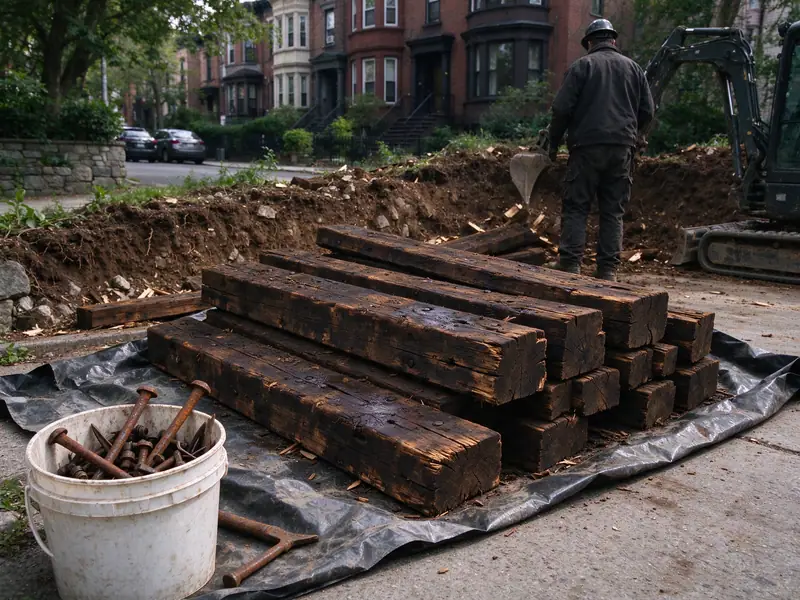
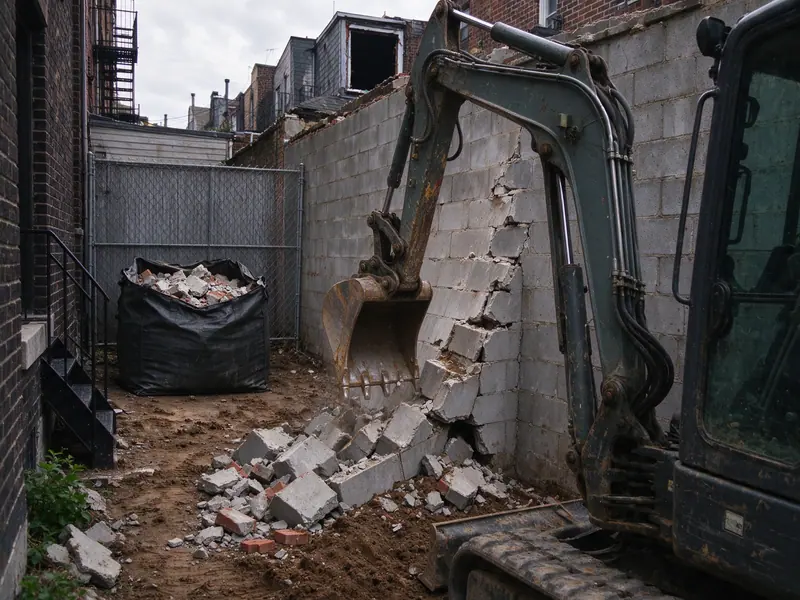
Removal. The wall comes out in sections with the slope cut back or braced, so the yard above doesn't follow it down.
Disposal. Creosote-treated railroad ties are chemically treated wood. They shouldn't be burned, chipped for mulch or reused around gardens and play areas, and they need to go to a facility that accepts treated wood. Removal and proper disposal are a separate line on our price, not something left at the curb.
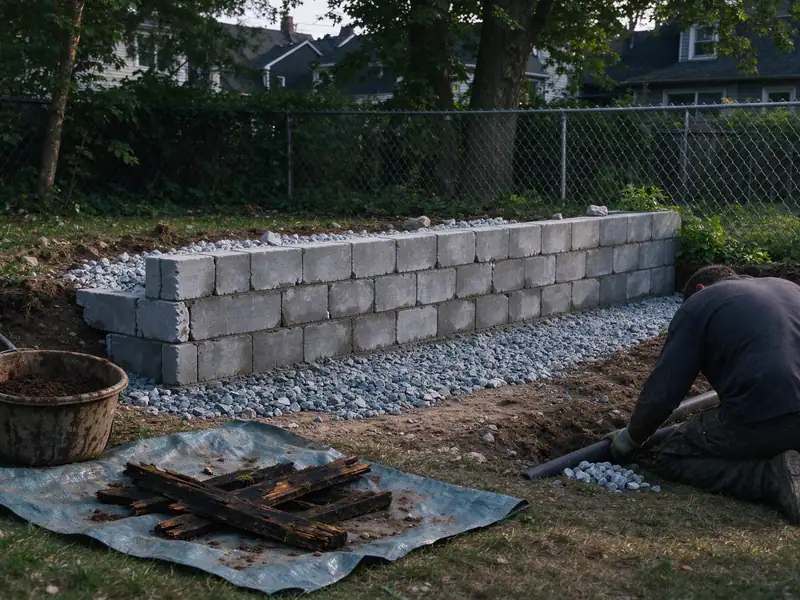
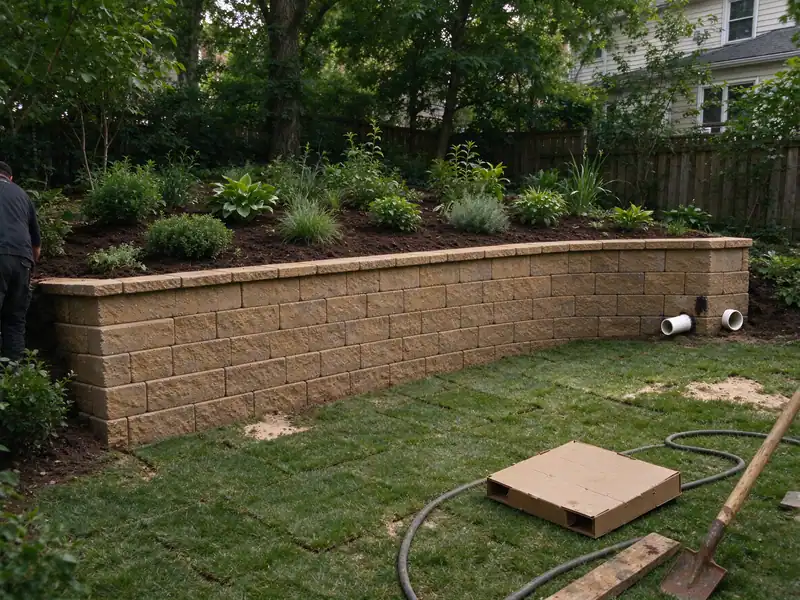
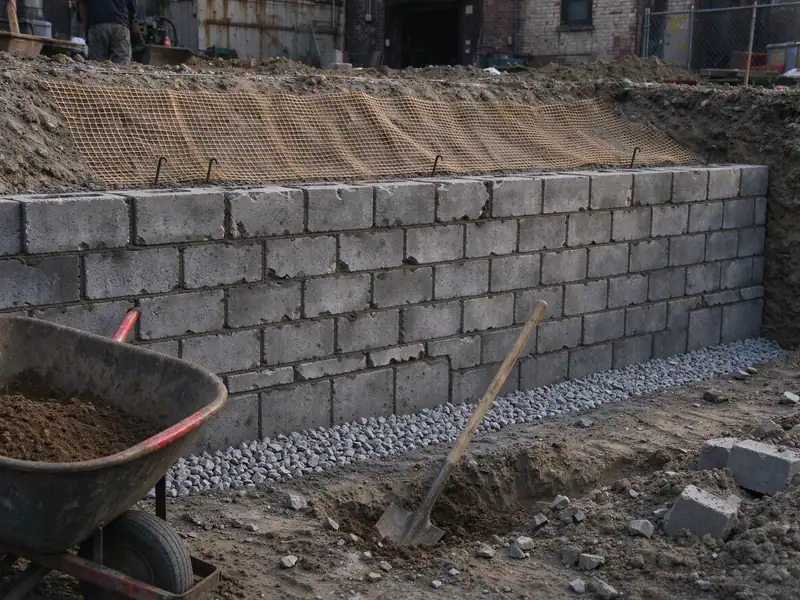
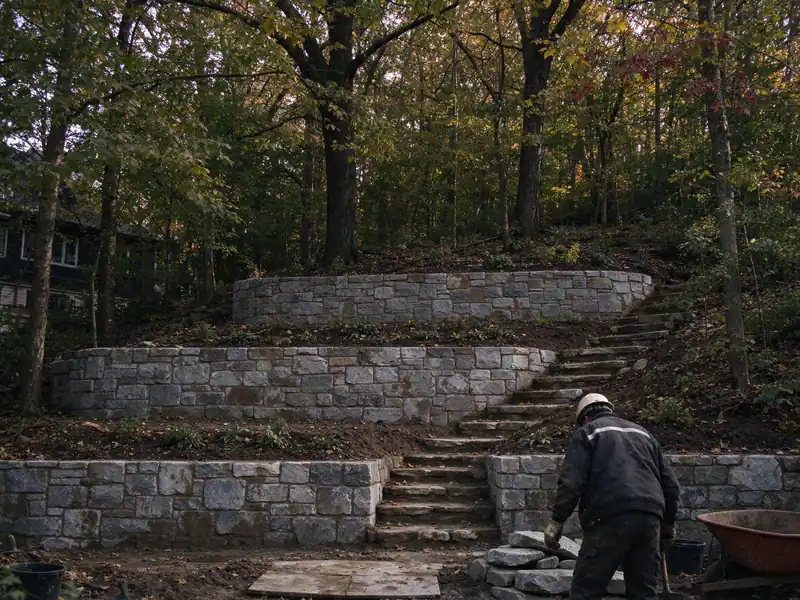
What replaces it. Most tie walls are replaced with segmental block, which suits similar heights and goes in without heavy forming. Along a driveway or where space is tight, reinforced poured concrete is the stronger choice. Either way the new wall gets what the old one lacked: a compacted base, clean ¾-inch drainage stone with filter fabric, and a perforated pipe that daylights. We generally don't rebuild in timber.
Permits. Many old tie walls were built without one. A replacement 4 feet or taller from the top of the footing, or one supporting a surcharge such as a driveway, needs a DOB permit with plans by a licensed engineer or architect (1 RCNY §101-14). We build to the plans and coordinate the filing. For replacements in other materials, see retaining wall replacement.
What tie wall replacement costs in NYC
For comparison, a new timber or railroad-tie wall runs about $20–$40 per square foot of wall face in NYC (HomeAdvisor's national $15–$30, 2026, × RSMeans NYC index 129.1) — cheap to build, and short-lived. A segmental block replacement runs about $20–$45 per square foot and poured concrete about $26–$65 on the same basis, plus removal and disposal of the old wall. For a whole-job view, a rebuild typically runs about $90–$160 per linear foot (Fixr, January 2025, × 1.29) before engineering. The cost estimator gives a first number. Every job gets a written contract before work starts, as New York's General Business Law §771 requires for work over $500.
What's included
- ✓Free site visit with rot probing at the base and deadmen
- ✓Measured height, length and lean
- ✓Identification of creosote vs. pressure-treated timber
- ✓Line-item price for removal, disposal and the new wall
- ✓Removal in sections with the slope braced
- ✓Disposal of treated ties at a facility that accepts them
- ✓New block or concrete wall with real drainage
- ✓Engineer and DOB filing coordination when required
DIY vs. cheap operator vs. a wall built properly
| Factor | DIY | Cheap operator | Built properly |
|---|---|---|---|
| Drainage behind the wall | Native soil backfill | A little gravel, no pipe | 12 in+ of clean crushed stone, filter fabric, perforated pipe that daylights |
| Footing | Set on topsoil or sod | Shallow, uncompacted | Compacted base, sized and set below the frost line to the design |
| Reinforcement | None | None | Geogrid or rebar to an engineer's design where height and load call for it |
| Permit and engineer (walls 4 ft+ or surcharged) | Skipped | Skipped or "not needed" | Stamped plans and a DOB filing |
| Local Law 37 (10 ft+ on a right-of-way) | Unknown | Ignored | Built and documented so the QRWI report goes smoothly |
| Paperwork you keep | None | A handwritten estimate | Written contract, line-item scope, closeout photos |
| Where it usually fails | First freeze-thaw seasons | Within a few years, at the drainage | Designed to carry its load for decades |